
JANSIRANI NATARAJAN
Oman
Psychosocial Adjustment and Social Support Among Omani Ostomy Patients: A Correlational Study
Dr Jansirani Natarajan, Presenting author, Assistant Professor, College of Health Sciences, University of Buraimi, Al Buraimi, Oman
Dr Mickael Joseph, Associate Professor, College of Nursing, Sultan Qaboos University, Muscat, Oman
Abstract
Background
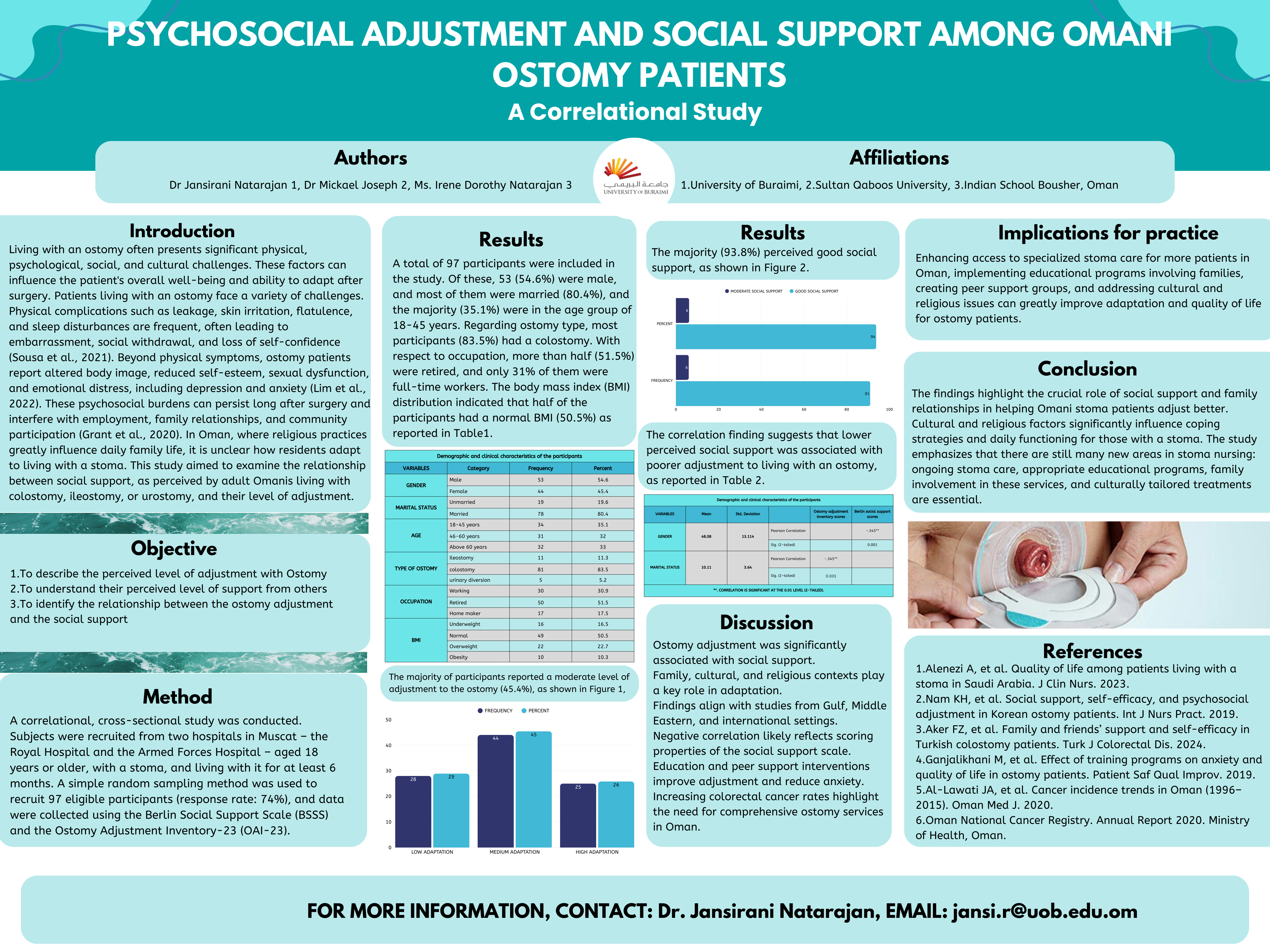
Background: Living with an ostomy often presents significant physical, psychological, social, and cultural challenges. These factors can influence the patient’s overall well-being and ability to adapt after surgery. In Oman, where religious practices greatly influence daily family life, it is unclear how residents adapt to living with a stoma. This study aimed to examine the relationship between social support, as perceived by adult Omanis living with colostomy, ileostomy, or urostomy, and their level of adjustment.
Methods
Methods: A correlational, cross-sectional study was conducted. Subjects were recruited from two hospitals in Muscat – the Royal Hospital and the Armed Forces Hospital – aged 18 years or older, with a stoma, and living with it for at least 6 months. A simple random sampling method was used to recruit 97 eligible participants (response rate: 74%), and data were collected using the Berlin Social Support Scale (BSSS) and the Ostomy Adjustment Inventory-23 (OAI-23).
Results
Results: Most patients were male (54.6%), married (80.4%), and retired (51.5%). Most individuals had colostomies (83.5%). Across the BSSS domains, perceived support was moderate. There was a significantly negative relationship between adjustment and perceived social support, r = -0.345, p & < 0.001. That is, the lower the level of social support, the worse the adjustment. Conclusions Conclusion: The findings highlight the crucial role of social support and family relationships in helping Omani stoma patients adjust better. Cultural and religious factors significantly influence coping strategies and daily functioning for those with a stoma. The study emphasizes that there are still many new areas in stoma nursing: ongoing stoma care, appropriate educational programs, family involvement in these services, and culturally tailored treatments are essential. Implications for Practice: Enhancing access to specialized stoma care for more patients in Oman, implementing educational programs involving families, creating peer support groups, and addressing cultural and religious issues can greatly improve adaptation and quality of life for ostomy patients.
Leave A Comment