
Enang II Brice Junior
Cameroon
A Glycosyl flavonoids, tannin and anthocyanin rich extract as potent source of novel bioactive compounds for the management of ulcerative colitis
Brice Junior Edie Enang II, Sylvain Nsangou Pechangou, Lesli-Loic Ngoumon Chourupouo, Vigny Sayal Ngohoba, Frederic Nico Njayou, Paul Fewou Moundipa
Laboratory of Pharmacology and Toxicology, Department of Biochemistry, Faculty of Science, University of Yaoundé 1, 812 Yaounde, Cameroon
Abstract
Background
Ulcerative colitis is a multifactorial intestinal inflammatory disease mainly affecting the large intestine. It is a chronic inflammatory disease leading to the disruption of the intestinal barrier. Many treatment options are available, but none of them are curative. Most are single targeted. Ulcerative colitis is increasingly being recognized as a public health concern and lack of effective long-term treatment shows the urgent need to look for therapeutic alternative.
Methods
Herein, we investigated the effect of Alchornea cordifolia fruits aqueous extract on a murine model of ulcerative colitis. Two doses of fruit extracts were used (25 &100mg/kg) and the effect was compared to that of dexamethasone a reference drug. Also a chemical profiling of the extract was done through LCMS. Major compounds were tested in silico against some key physiopathological targets.
Results
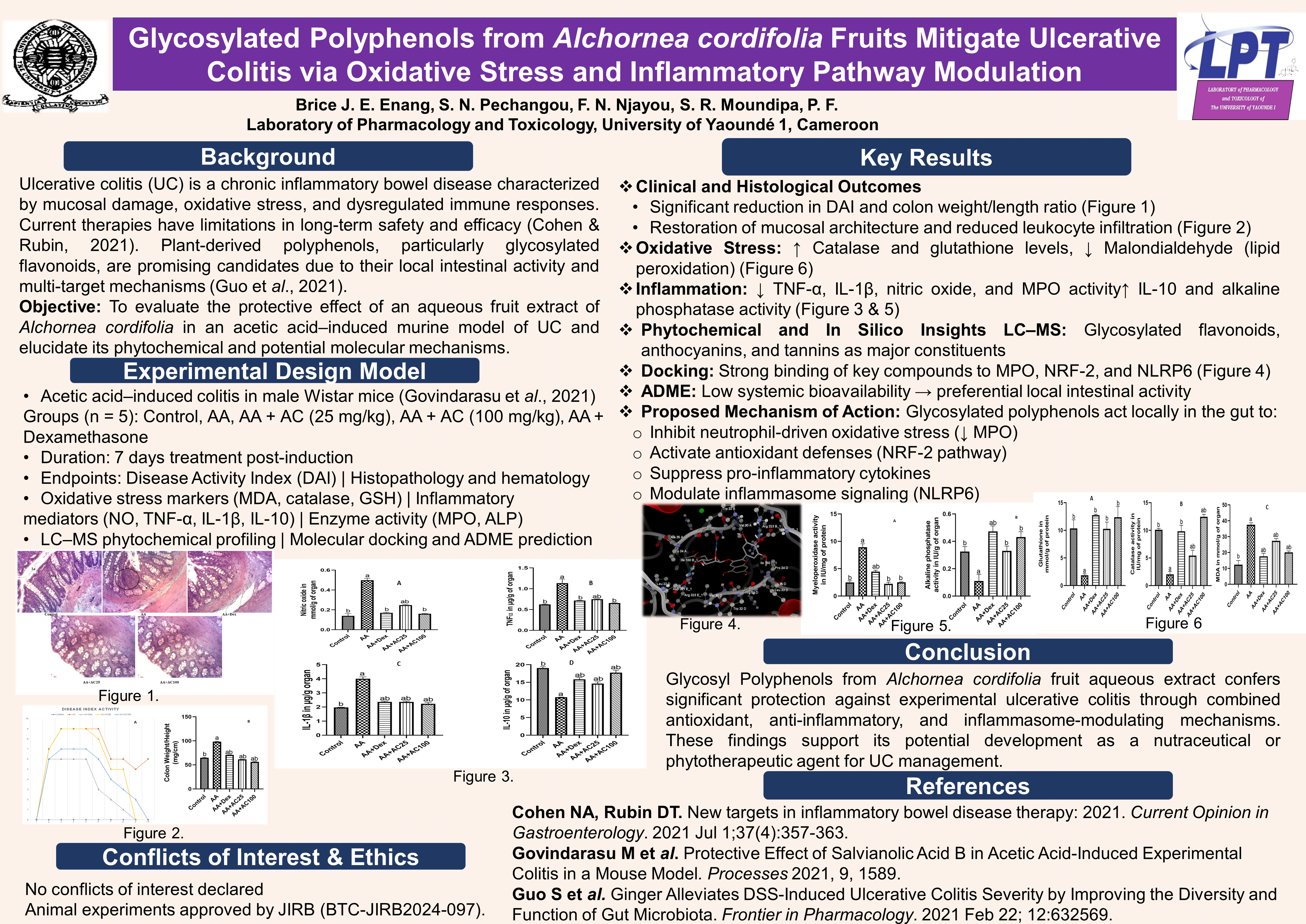
This extract reduces the disease index activity. Histological analysis showed that leucocytes infiltration was reduced in treated groups. Also, hematological analysis revealed the promotion of platelets recruitment in treated groups in order to promoted intestinal wound healing, and also the reducing of neutrophils recruitment. Moreover, oxidative stress parameters were modulated and that was confirmed by the reduced Malone dialdehyde level in treated groups. Proinflammatory markers level was significantly reduced, and anti-inflammatory markers level/activity was increased in treated groups. Nonetheless, myeloperoxidase level was significantly reduced from 8.91 in the untreated group to 2.24 and 2.51 IU/mg of proteins in the two doses of treated groups. In silico studies highlighted good affinity between detected compounds (glycosyl flavonoids, tannin and anthocyanin) and molecular targets investigated throughout docking scores.
Conclusions
This extract now stands as a potent source of bioactive compound for the development of therapeutic alternatives for the management of ulcerative colitis.
Leave A Comment