
Narjisse Hayoun
Morocco
immunogenetics studies of spndylarthropathy in morocco
HAYOUN Narjisse1, ZIAN Zeineb1, AZMI Hasna2, BENNANI MECHITA Mohcine1
1 Intelligent Automation & BioMed Genomics Laboratory, Faculty of Sciences and Techniques of Tangier, Abdelmalek Essaadi University, Tetouan, Morocco
2 Laboratory of Virology, Oncology, Biosciences, Environment and New Energies, Faculty of Sciences and Techniques Mohammedia, University Hassan II of Casablanca, Casablanca, Morocco
Abstract
Background
This study aimed to determine the impact of COVID-19 on the onset and clinical manifestations of spondyloarthritis (SpA) in Moroccan patients. We investigated whether SARS-CoV-2 infection may trigger new-onset SpA or worsen pre-existing disease, and assessed associated risk factors.
Methods
From March 2024 to March 2025, we retrospectively analyzed 361 patients diagnosed with both SpA and COVID-19 at a private rheumatology clinic in Casablanca, Morocco. The medical records included demographic, clinical, and biological data of two subgroups: pre-COVID-19 SpA and post-COVID-19 SpA. Statistical analyses were carried out using SPSS version 21.
Results
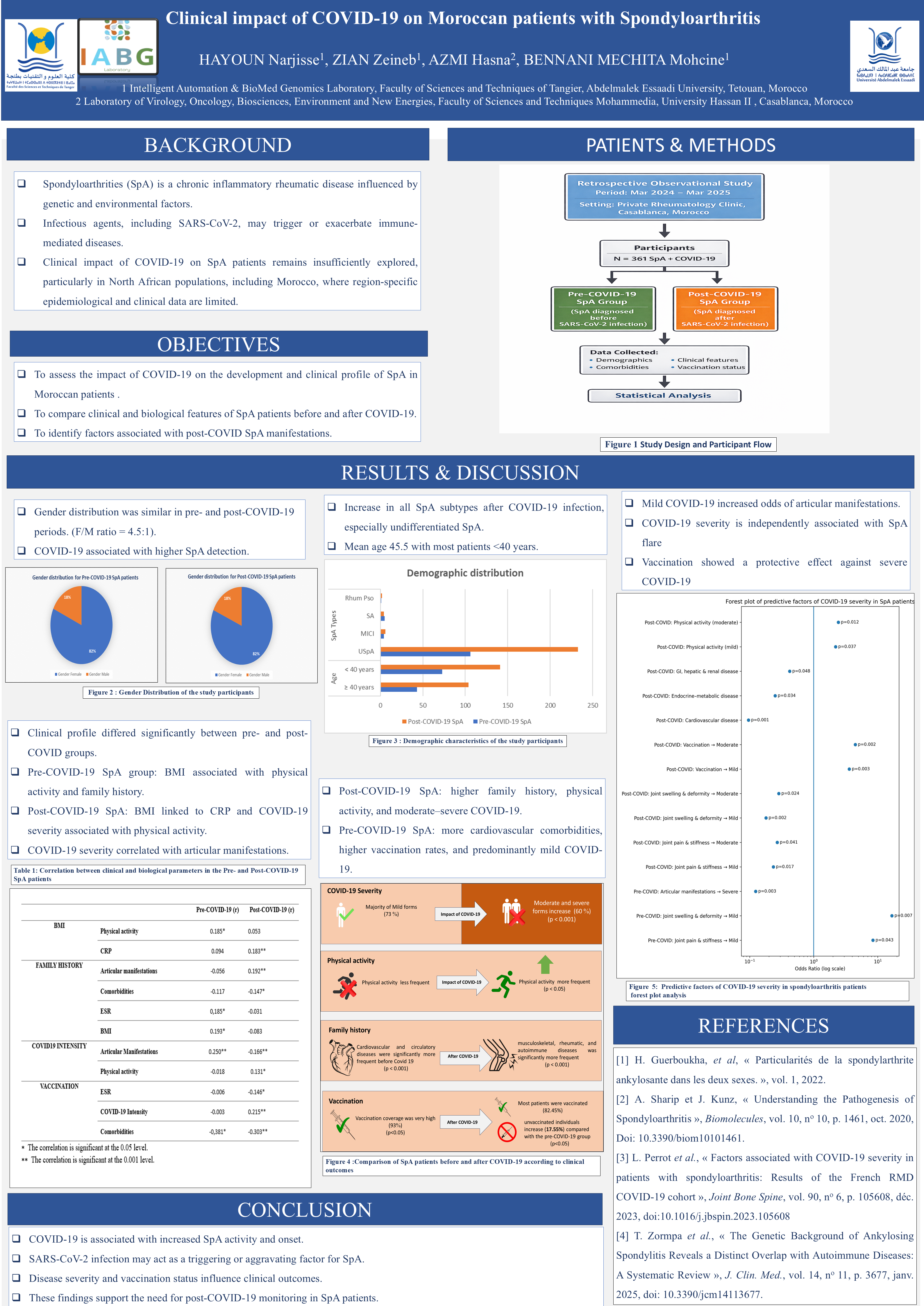
Our cohort was predominantly female (81.7%). Undifferentiated SpA was the most frequent subtype (93.9%). In the pre-COVID-19 SpA group, significant correlations were found between including inflammatory markers (ESR/CRP, p < 0.05), COVID-19 severity (p < 0.01), BMI (p < 0.05), comorbidities (p < 0.01), and family history of SpA (p < 0.05). In the post-COVID 19 group, physical activity (p < 0.05) and comorbidities (p < 0.01) showed stronger associations with symptoms . Younger age was protective against severe disease (OR = 0.657, p = 0.006), whereas higher BMI and positive family history were associated with increased severity. Symptom intensity emerged as the strongest predictor of severe COVID-19 outcomes (OR = 3.113, p < 0.001). Conclusions SARS-CoV-2 infection may act as a triggering or aggravating factor in SpA patients, particularly in individuals with clinical or genetic predispositions. These results highlight the need for close monitoring of SpA patients during and after COVID-19 infection. More investigations are required to better understand the long-term effects of COVID-19 on SpA and to guide improved care strategies.
Leave A Comment