
Abida Bhat
India
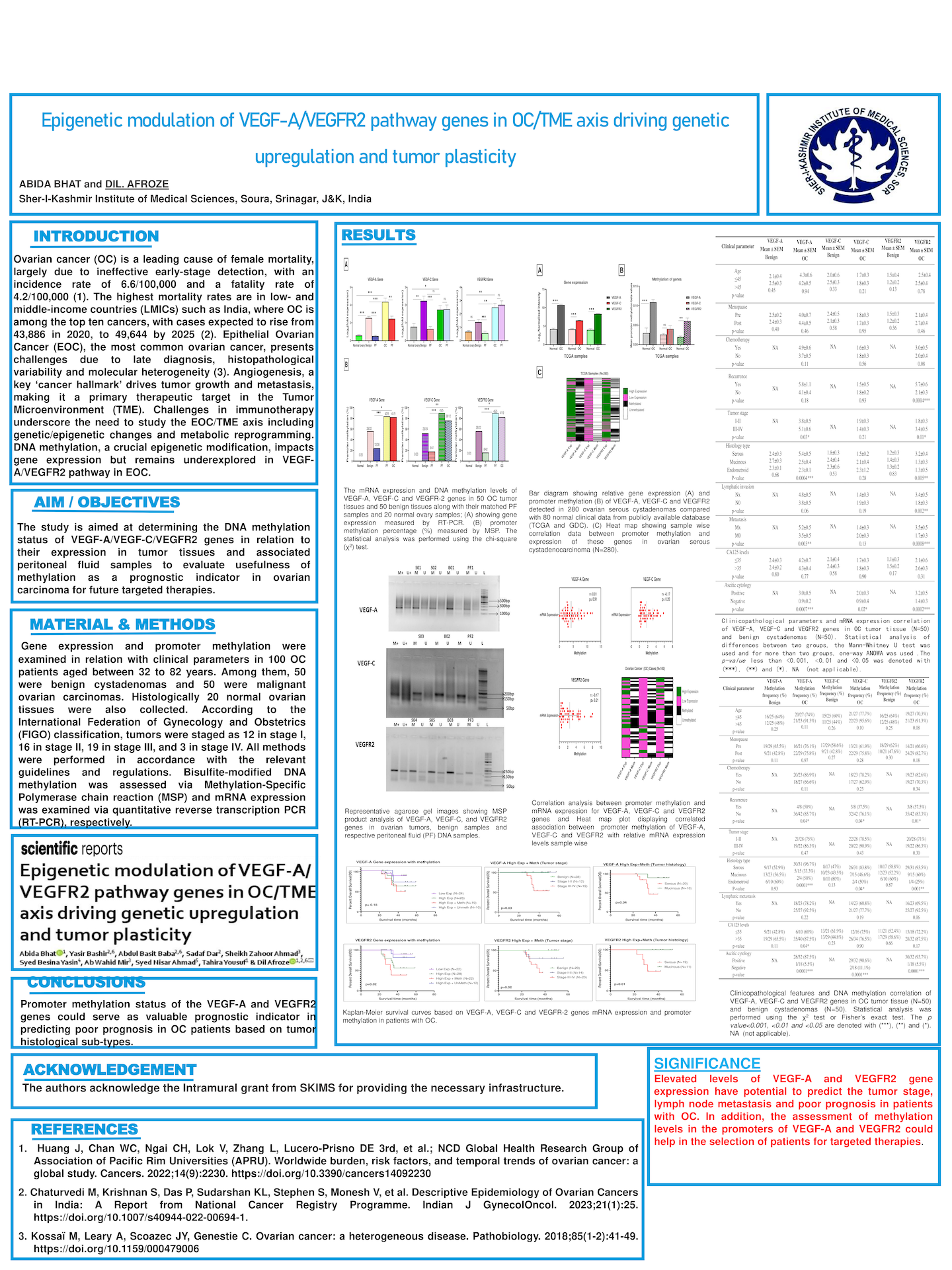
Epigenetic modulation of VEGF-A/VEGFR2 pathway in EOC/TME axis driving genetic upregulation and tumor plasticity.
Abida bhat, Dil Afroze
Advanced centre for human genetics (ACHG), Sher-i-kashmir institute of medical sciences ( SKIMS), Srinagar, Kashmir, India.
Abstract
Background
Epithelial Ovarian Cancer (EOC), the most common ovarian cancer, presents challenges due to late diagnosis, histopathological variability and molecular heterogeneity. Angiogenesis, a key ‘cancer hallmark’ drives tumor growth and metastasis, making it a primary therapeutic target in the Tumor Microenvironment (TME). Challenges in immunotherapy underscore the need to study the EOC/TME axis including genetic/epigenetic changes and metabolic reprogramming. DNA methylation, a crucial epigenetic modification, impacts gene expression but remains underexplored in VEGF-A/VEGFR2 pathway in EOC. Thus, study investigated the impact of DNA methylation on VEGF-A, VEGF-C and VEGFR2 genes expression in EOC as prognostic markers.
Methods
DNA methylation was analyzed via methylation-specific polymerase chain reaction (MSP) and mRNA expression via quantitative reverse transcription (RT-PCR). Kaplan-Meier analysis was used to explore the association between epigenetic expression and 5-year survival.
Results
Malignant EOC had significantly higher VEGF-A (82%), and VEGFR2 (82%) methylation compared to benign cystadenomas. Peritoneal Fluid (PF) from EOC patients also exhibited elevated methylation levels (VEGF-A: 84%, VEGF-C: 90% and VEGFR2: 90%) versus benign PF. VEGF-A and VEGFR2 mRNA levels were significantly higher in tumor tissue than benign samples (p=0.0003 and 0.001). No significant correlation was found between methylation and expression for EOC patients. Survival analysis indicated that higher methylation/expression of VEGF-A and VEGFR2 (p= 0.04 and p= 0.02) was associated with shorter overall survival, strongly predict poor prognosis. Increased methylation and expression levels of VEGF-A and VEGFR2 genes are associated with tumor staging, lymph node metastasis and prognostic significance in EOC patients.
Conclusions
Thus, epigenetic modification encompassing tumor cells and TME could be a potential avenue for DNA methylation-related tumor immunotheraphy or adjunctive therapy thereby effecting clinical efficacy.
Leave A Comment