
Ana-Maria Rotaru
Moldova
Sleep Disorders and Chronic Diseases: Their Influence on Sleep Quality and Health
Rotaru Ana-Maria 1
1. University of Medicine and Pharmacy for Niclae Testemițanu of Moldova, Chișinău, Moldova
Abstract
Background
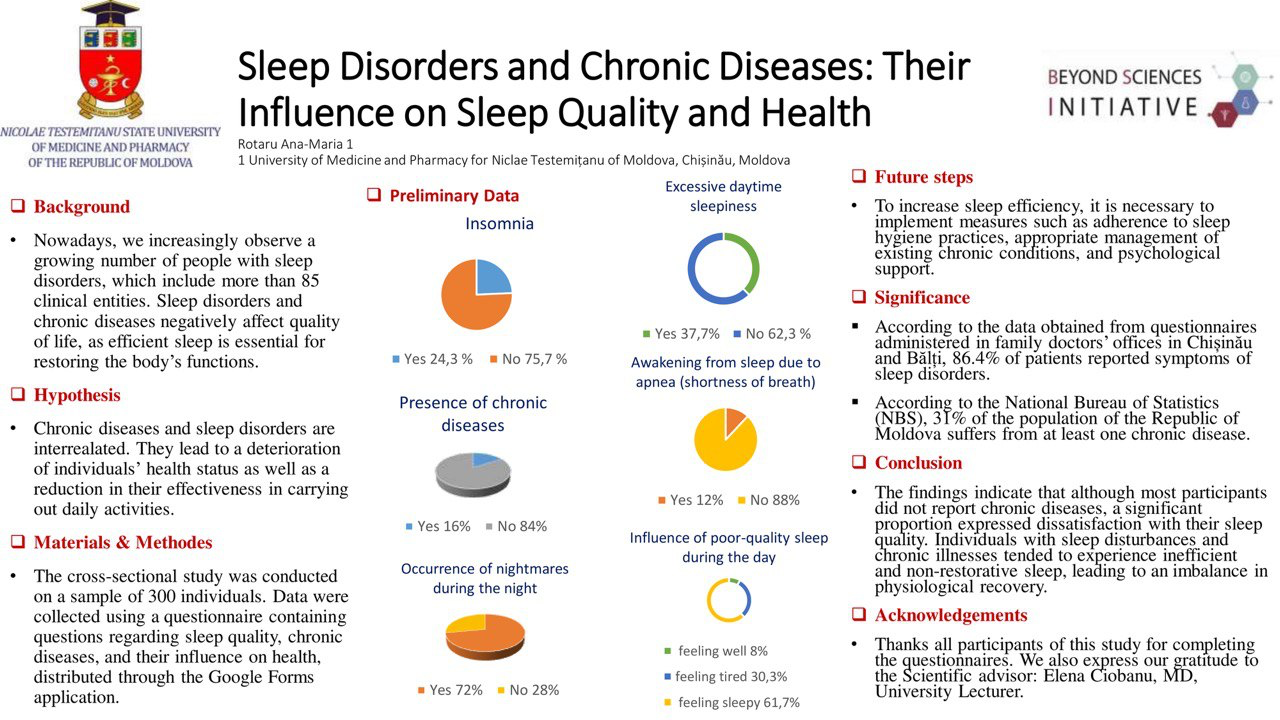
Nowadays, we increasingly observe a growing number of people with sleep disorders, which include more than 85 clinical entities. The most common are: obstructive sleep apnea syndrome (OSAS), narcolepsy-cataplexy syndrome, hypersomnia, insomnia, restless legs syndrome, parasomnias, sleepwalking, night terrors (Pavor nocturnus), confusional arousals, nightmares, and sleep-related eating disorders. Sleep disorders and chronic diseases negatively affect quality of life, as efficient sleep is essential for restoring the body’s functions. The aim of the study was to examine how sleep disorders and chronic illnesses influence sleep quality and overall health.
Methods
The cross-sectional study was conducted on a sample of 300 individuals. Data were collected using a questionnaire containing questions regarding sleep quality, chronic diseases, and their influence on health, distributed through the Google Forms application.
Results
Occurrence of nightmares during the night: yes – 72%, no – 28%. Impact of nightmares on sleep quality: yes – 56.3%, no – 43.7%. Insomnia: yes – 24.3%, no – 75.7%. Awakening from sleep due to apnea (shortness of breath): yes – 12%, no – 88%. Frequency of awakenings during the night: never – 53.3%, 2–3 times – 41.3%, 4 or more times – 5.3%. Excessive daytime sleepiness: yes – 37.7%, no – 62.3%. Spontaneous falling asleep during the day: yes – 28%, no – 72%. Number of hours slept per night: less than 6 hours – 28.3%, 6–7 hours – 44.7%, 7–8 hours – 23.3%, more than 8 hours – 3.7%. Influence of poor-quality sleep during the day: feeling well – 8%, feeling tired – 30.3%, feeling sleepy – 61.7%. Presence of chronic diseases: yes – 16%, no – 84%.
Conclusions
The findings indicate that although most participants did not report chronic diseases, a significant proportion expressed dissatisfaction with their sleep quality. Individuals with sleep disturbances and chronic illnesses tended to experience inefficient and non-restorative sleep, leading to an imbalance in physiological recovery. It is necessary to implement measures such as adherence to sleep hygiene practices, appropriate management of existing chronic conditions, and psychological support.
Leave A Comment