
Engy Elekhnawy
Egypt
Unveiling the potential antibacterial action of acetylcysteine for managing Staphylococcus aureus wound infections: in vitro and in vivo study
Rehab Ahmed1 · Engy Elekhnawy2
1 Division of Microbiology, Immunology and Biotechnology,
Department of Natural Products and Alternative Medicine,
Faculty of Pharmacy, University of TabuK, Tabuk 47713,
Saudi Arabia
2 Pharmaceutical Microbiology Department, Faculty
of Pharmacy, Tanta University, Tanta 31527, Egypt
Abstract
Background
The global propagation of infections is a massive challenge in managing infected wounds. One of the most widely detected
bacteria in wounds is Staphylococcus aureus. These bacteria possess multiple virulence factors, like biofilm formation, which
hinder antibiotic treatment. Accordingly, it is vital to explore alternative therapeutics for managing these infections.
Methods
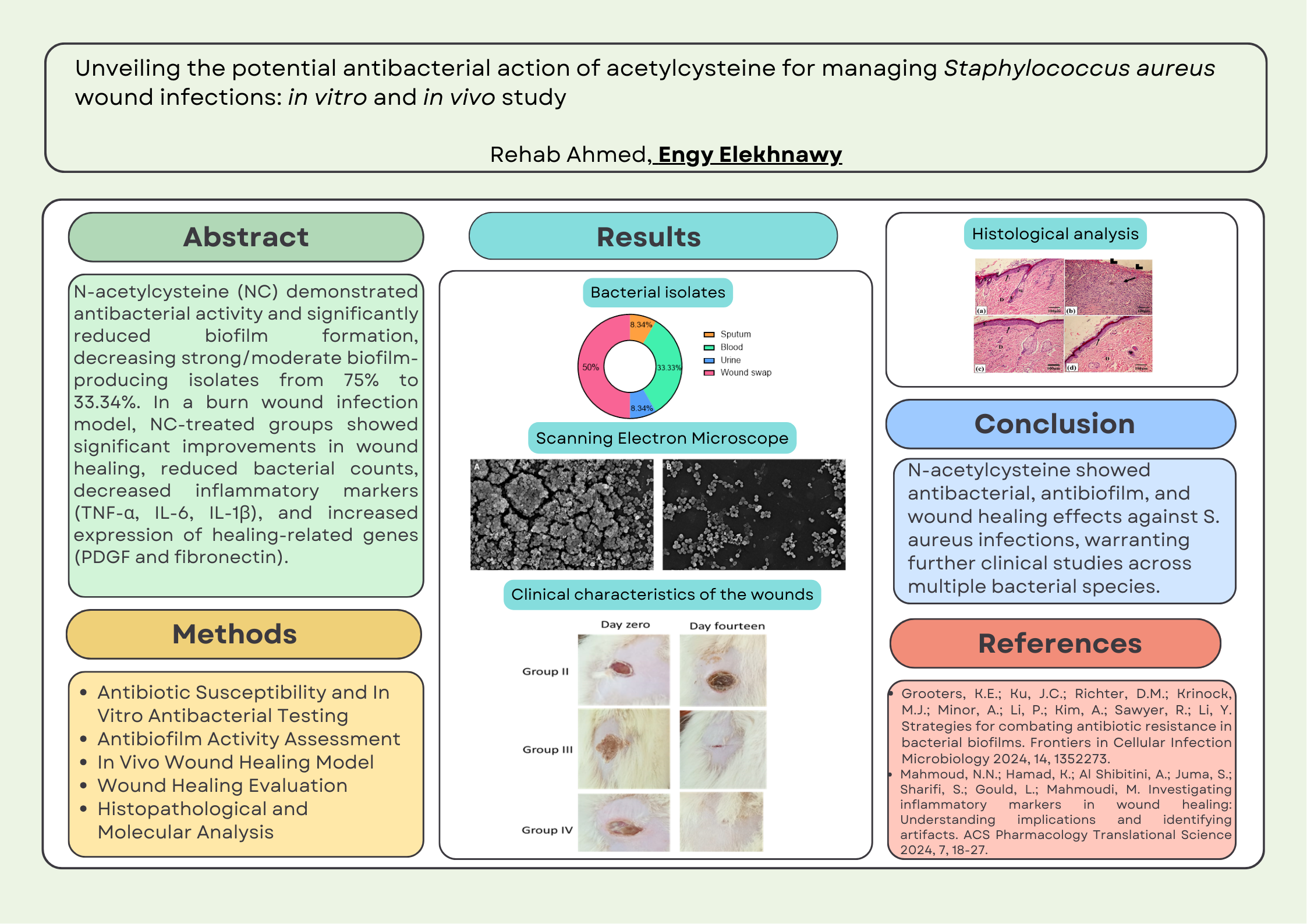
We estimated the antibacterial and antibiofilm actions of N-acetylcysteine (NC). The antibacterial action was assessed in vitro and in vivo using a burn infection model. the antibiofilm action was assessed using scanning electron microscope and qRT-PCR
Results
It revealed antibacterial action with minimum inhibitory concentration values of 256–2048 μg/mL. The NC diminished the percentages of strong and moderate biofilm-forming isolates from 75% (18 isolates out of 24) to 33.34% (8 isolates out of 24). Scanning electron microscopy and qRT-PCR confirmed NC’s antibiofilm action. NC revealed a remarkable (p < 0.05) enhancement of the macroscopic wound healing and a decline of the bacterial count in the infected wound tissues compared with the positive control. The histopathological and immunohistochemical investigations elucidated a considerable improvement of the skin wound tissues of the NC-treated group with a decrease in the inflammatory marker immunostained cells (TNF-α, IL-6, and Il-1β) compared to the positive control. Besides, the qRT-PCR exposed an induced upregulation of the platelet-derived growth factor (PDGF) and fibronectin genes, which have a role in renovating skin tissues. Conclusions From the previous outcomes, NC could be a healing agent, mainly in S. aureus-infected wounds. To our knowledge, this is the first time to report the wound healing potential of NC for S. aureus-infected wounds.
Leave A Comment